
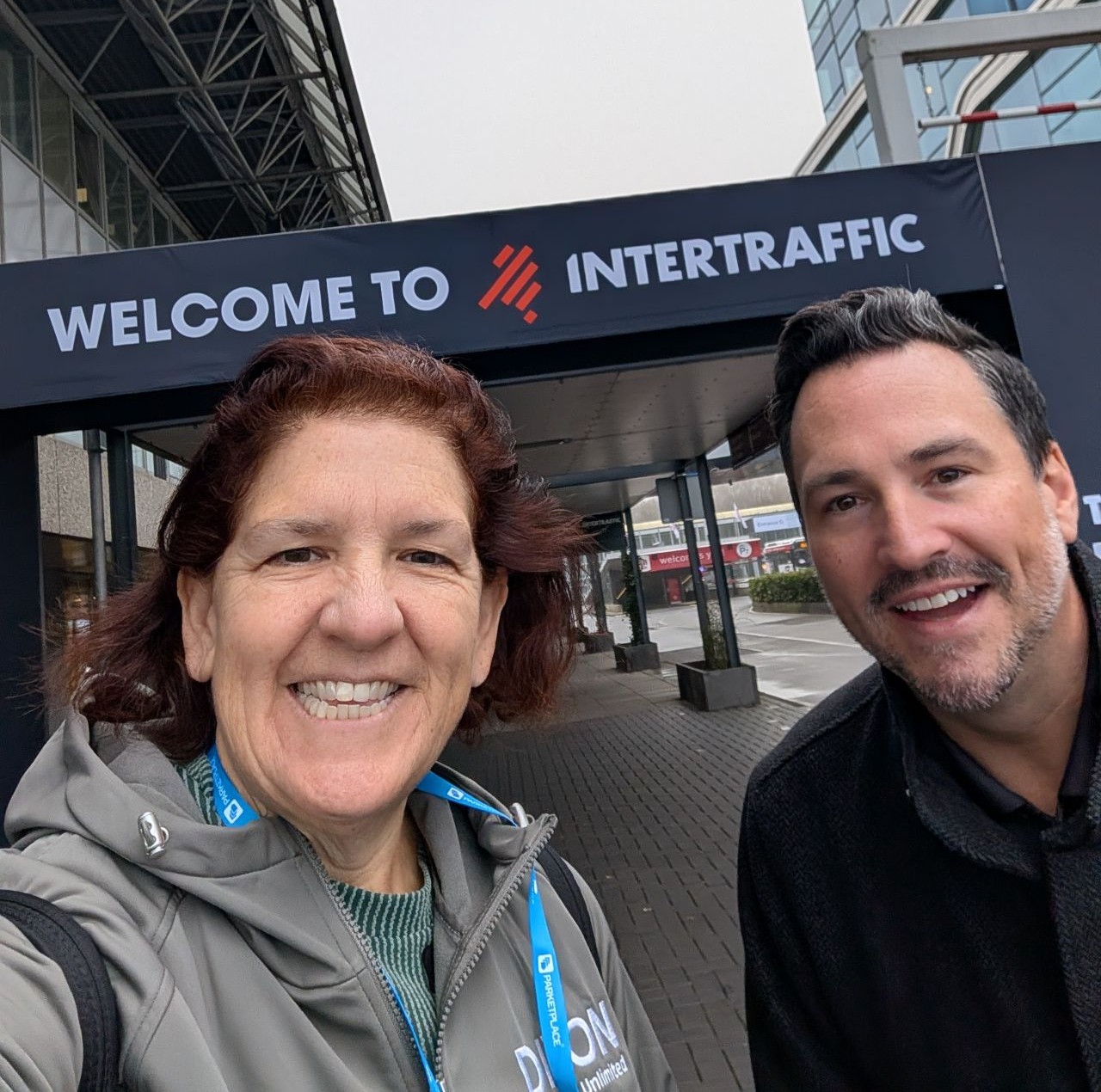
Every two years, DIXON makes the journey to Amsterdam to attend Intertraffic, one of the world's premier conferences dedicated to traffic management, infrastructure, smart mobility, and parking technology. As is often noted in conversations across the United States, Europe is generally a decade ahead of the United States in terms of both technology adoption and strategic planning. Intertraffic serves as a window into that future where we can gather with global industry leaders, innovators, policymakers, and practitioners who are shaping the way cities move. For DIXON, attending Intertraffic is not simply a professional development exercise; it is an essential investment in staying ahead of a rapidly evolving industry.
DIXON's mission is rooted in a commitment to delivering the most informed, innovative, and data-driven parking and transportation strategies for our clients. Achieving that requires more than staying current with domestic trends and is aided by a global perspective. Experiencing new cities, engaging with global vendors, and witnessing transportation strategies refined over decades feeds directly into the recommendations and solutions we bring back to the communities we serve.
Perhaps the most valuable of all is the opportunity to hold our own U.S. operations up against parking and transportation systems that have been running and continuously improving for many decades. Those comparisons offered honest, sometimes humbling insights into where the U.S. stands and where the greatest opportunities for advancement lie.
DIXON’s key takeaways include:
A Look Inside Madrid: The EYSA City Tour
The most memorable visit of the trip came outside the conference hall entirely. DIXON had the privilege of joining a guided tour of the City of Madrid's parking operations, hosted by EYSA, one of Spain's leading parking and mobility management companies. The tour offered a rare, ground-level view of how a major European city manages 180,000+ parking stalls. We observed firsthand how EYSA maintains urban infrastructure while keeping it operationally efficient, and how their enforcement teams leverage LPR technology to manage compliance across a vast and complex network.
Madrid has also implemented congestion pricing as part of a broader strategy to manage vehicle traffic in the city center. We were able to see the technology and operational systems behind that initiative positively impacting congestion, parking availability, and vehicle emissions.
Final Thoughts
Intertraffic Amsterdam and the Madrid operations tour offered a powerful reminder of how much the global transportation landscape has to teach. As our industry continues to develop with vendor consolidation and emerging technologies, the U.S. must adapt international lessons to its own unique legislative and operational realities. Europe's measured approach to AI provides a valuable contrast to U.S. enthusiasm, and the maturity of LPR systems abroad signals clearly where the industry is heading. Experiencing world-class parking and transportation operations in-person provides the opportunity to understand what is possible and make the case for meaningful progress here at home.
Contact us today to explore how DIXON can help you achieve your goals with innovative, customized solutions.

.svg)
.svg)
